by TherapyWorks OT Department | May 9, 2014 | Occupational Therapy
![]()
Make a Splash: Water is not only refreshing on a hot summer’s day, but also is very therapeutic for your child. You can go to a public pool nearby, fill a little plastic pool, lay out a splash pad, or just play in the sprinklers. These are simple and easy ways you can enjoy water activities with your child. There are actually many benefits that your child can gain from these types of water experiences, such as, tolerating touch, eye contact, balance, gross motor planning and even learning water safety.
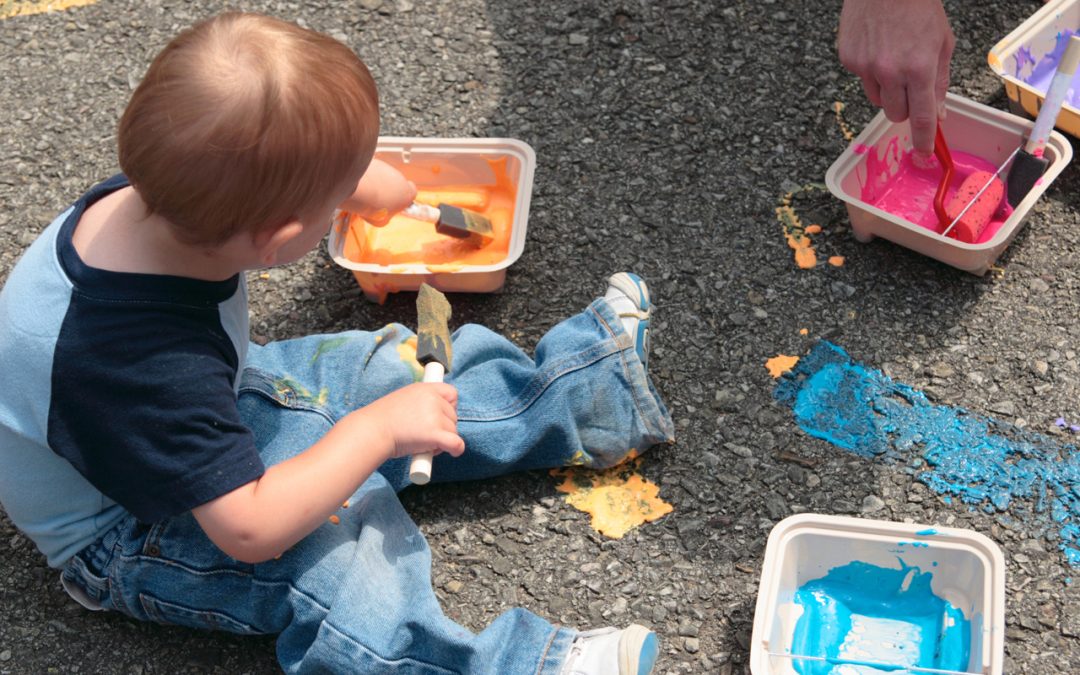
Painting (Outdoors): Painting may be thought of as messy instead of “fun” in a parent’s mind. But when the kids are hot and ready to come inside you can actually keep them cooled off and refreshed with this creative painting idea…so let’s beat the heat.
Kool-Aid ice cubes: Try this way of fun in the sun painting and get in a few licks to awaken their palate too. All you have to do is buy Kool-Aid packages (variety of colors) and then place powder in ice trays and pour in a little bit of water. You can place Popsicle sticks in each one for easier grasping. This is great for kids that are tactile defensive or need to work on their grasping skills to develop a tripod or quadripod grasp. It’s tasty therapy.
Chalk: Have you ever colored with a marker and then switched to crayons? When you colored with a marker you probably realized you did not have to put much effort. The ink glides on the paper. With a crayon you have to apply more pressure. The same pressure is applied when using chalk. Chalk drawing provides a lot of sensory feedback into the hands, forearms and shoulder joints. It allows us to know where our body is in space. Side walks and driveways make a perfect canvas for a rainbow of colors.
Park: Going to the park is a perfectly free playtime activity. It allows children to explore the outdoor environment and is a great tool for motor planning. While they are climbing ladders and hanging on the monkey bars, they are building strength in their bodies. This also allows them to interact with other children and enhances their social skills.
Erin Kizzar, MOT, OTR/L
TW Occupational Therapy Clinic Manager
Occupational Therapist
Also Check Out:
Summertime Sensory Fun
Summer Speech Fun
Keep Learning with summertime OT Fun

by TherapyWorks OT Department | Apr 8, 2014 | Occupational Therapy
A “sensory diet” is a personalized activity plan that provides the sensory input a person needs to stay focused and organized throughout the day in a structured way. People of all ages with varying levels of sensory issues can benefit for a sensory diet. We all use sensory diets in our own way during the day, from drinking our cup of coffee in the morning, to chewing gum or snacking while starring at the computer, to hot baths at the end of the day to de-stress. In the same way, an occupational therapist will create a structured schedule to offer children activities that will help there body “wake up” or “slow down” so that they can function appropriately throughout the day.
All people are “wired” differently, this is what makes us unique! Our nervous system regulates the sensory input we experience throughout the day and has the job of filtering important from non-important, safe from not safe input. Sometimes these messages are “scrambled,” which leads to arousal levels that can be “too high,” “just right,” or “too low.” When we are “too high” our body is constantly on the move, we are fidgety and we can’t focus and complete the tasks. When we are “too low” our body is tired and we can’t focus and get up and moving. The job of a sensory diet is to use sensory tools to help regulate our nervous system so that we are “just right” so that we can focus and complete our task. For example when a child is “too high,” their therapist may suggest to squish between pillows or complete 10 frog jumps to help slow the child’s body. If the child is to low the occupational therapist may suggest jumping on a trampoline or swinging to wake them up.
Typically I suggest trying to complete some of the listed activities for 10-15 minutes every couple hours at home. Please consult with your occupational therapist because it is important that the type of input a child is getting depends on their arousal level. Many times it is great to complete tasks before and after school hours to help improve focus and transitions.
 High arousal tools:
- Lying under a weighted blanket or stack of pillows and blankets for deep pressure.
- Wearing a weighted or compression vest ( ask your therapist about one before buying).
- Help put away heavy groceries or carry laundry basket.
- Wear a backpack that has a couple books in it for weight.
- Wheelbarrow walk, bear walk, push-ups, sit-ups.
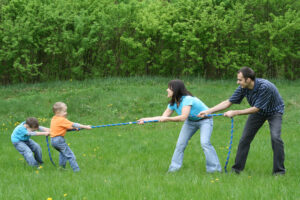
- Tug of war games.
- Roll self up in a blanket like a burrito
Low arousal tools:
- Jumping on a trampoline or into a pile of pillows.
- Swing
- Spinning on a sit-n-spin or log roll down the hallways.
- Bouncing on a therapy ball
- Drinking or eating something with a strong flavor (such as sour)
Michelle Zurek,
MA, OTR/L
Clinic Therapist, TherapyWorks
Also check out – What is Occupational Therapy and Take it Outside

by TherapyWorks OT Department | Apr 2, 2014 | Occupational Therapy, Physical Therapy
APRIL IS OCCUPATIONAL THERAPY MONTH!
Everyone always thinks that tummy time is important only for babies but I want to tell you it is actually important for kids of all ages. Tummy time, also known as prone on elbows, is a developmental position in which the child is on their belly on a flat surface and propped up on their elbows. I recommend this position for all of my children especially my older kids and here is why…
- When the neck is extended it stimulates the brain stem which can be very regulating to the sensory system
- It helps build strength and stability through the shoulders and upper arms which is so important in the development of fine and visual motor skills
- It also promotes increased visual skills such as tracking a moving object which is important to the development of higher level skills such as academics and gross motor acquisition
 Here are some suggestions for activities while on tummy:
- Coloring, handwriting or homework tasks. I like to use a 3” binder as a slant board to help facilitate grasp while writing or coloring.
- Complete puzzles large or small.
- Watch TV or play a short video game. I recommend only a short period of screen time.
- Use an exercise ball with the child laying belly down while completing a floor task.
- Read a book.
- Play board games.
- Great for children to do at school for circle time, etc.
The ideas are limitless and I encourage parents to get on the floor and interact with their child in that position as well! Remember that the child may only tolerate several minutes at a time, but keep encouraging and persisting and eventually
their endurance will improve.
Have fun!
Erin Kizzar, MOT, OTR/L
OT Department Manager, Therapyworks
by TherapyWorks OT Department | Jul 31, 2013 | Occupational Therapy
What is “Crossing Midline”?
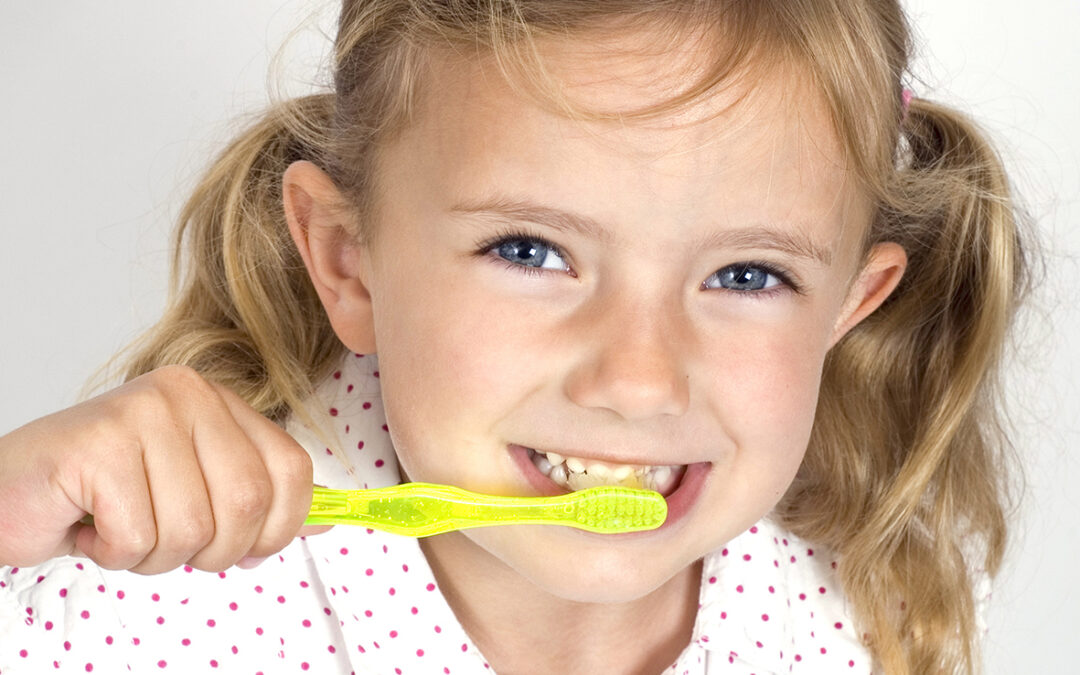
Imagine a line dividing your body into right and left sides. Crossing Midline includes any activity that requires one side to cross into the other side. Imagine using both hands to put on your shoes and socks, brushing your teeth, using your tongue to manipulate food from one side of your mouth to the other, combing your hair, reading, writing, etc.
Why is this important for brain development?
Crossing midline all starts with crawling, which typically develops around age 7-11 months. Crawling is a very important developmental milestone. For many children, especially those with Autism, Dyspraxia (motor in-coordination), or Dyslexia, they may have “skipped” the crawling stage all together. Crawling is important because it works on upper and lower body dissociation, trunk/core rotation, weight bearing/weight shifting, reciprocal movement patterns, and dynamic movement transitions (ie.: quadruped to side sit, quadruped to ½ kneel, etc.). This is also a precursor for crossing midline which is necessary for the brain to communicate across the corpus collosum, the thick band of nerve fibers which connects the two brain hemispheres. This is required for higher level skills such as reading and writing. In fact, research has shown that children with dyslexia have smaller, less developed, corpus collosums.
Symptoms:
Children who do not cross midline often do not develop hand dominance which should be determined by age 5. Children who do not cross midline often show symptoms including:
- poor fine motor control (immature pencil grasp, poor manipulation skills)
- poor bilateral coordination (catching a ball, cutting skills)
- poor upper/lower body coordination (jumping jacks, riding a bike)
- poor right/left discrimination
- becoming “stuck” in mid-reach and having to switch hands
Activities for home:
*Tip: For young children you may need to use stickers to match/touch (i.e.: red for right hand/left knee) or use a piece of tape to divide the body in half
Gross Motor:
- Cross crawls (bring your opposite hand, or elbow, to your opposite knee) x20-30
- Behind-the-back cross crawls (touch your right hand to your left food behind your back so the child uses body awareness instead of vision!)
- Sit criss-cross and throw a ball to a target on the opposite side of the body (look for core rotation). Gradually increase the angle of the throw.
- Sit back-to-back (or for a group sit in a circle) and use trunk rotation to turn and pass an object (i.e.: ball). Remember to go 10-20x both directions!
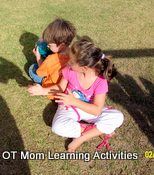
- Simon Says or Hokey Pokey for right/left discrimination i.e.: “Touch your left ear with your right hand”
Fine Motor:
- Hand games (Patty-cake, etc.)
- Bongo drums (may have to use stickers to match opposite hand to opposite drum)
- Restrict one hand, and use opposite hand to reach/grasp a variety of items, remember to reverse so both preferred and non-preferred hands are used. (i.e.: Memory game cards, puzzle pieces, anything!)
- Place x10 pennies or playing cards as a semi-circle across the table. Make sure child is exactly in the middle of the table and does not lean over to compensate. Use one hand to flip each item over than the opposite hand to flip over again.
- “Infinity 8” – draw a horizontal 8 on the table, or better yet on a vertical surface such as a mirror or easel. Position the child exactly in the middle then trace the 8 with both hands together, then right, then left. Do 5-10 loops per hand. This can be especially fun with shaving cream and toy cars to make a “racetrack” on your table or window J
- Wand play: Make a “Racetrack” (figure 8), “Ferris Wheel” circles (in front), and “Helicopter” blades (overhead) with bubble wands, streamers, scarves, ribbons, etc.
Great pictures and additional activities:

by TherapyWorks OT Department | Jun 3, 2013 | Occupational Therapy
It’s summer time and time to play, but why not continue the learning as well with some OT fun. As kids play in the summer and focus on all the fun activities, there are ways to incorporate and maintain the skills they have learned throughout the year while learning through play. Here are some ideas to do this summer to incorporate some fun OT skills!
Fine Motor Skills and Handwriting
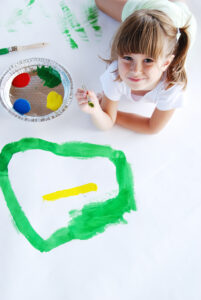 Keep a summer journal- have them write out one entry per day of what they did during that day. If working on reading skills, have them read aloud at the end of the week to remember all the fun things they did throughout the week! If they are not writing sentences yet, have your child draw a picture of their favorite thing that happened that day. This works on pre-writing shapes and drawing that is necessary for letter formation and will help improve visual motor skills as well.
- Make cereal necklaces on stretchy string so that they can wear throughout the day for a little snack. Lacing cereal such as cheerios or fruit loops works on grasping small objects as well using both hands to lace onto the string.
- Coloring and painting pictures with water colors is always a great way to improve grasp on different writing utensils. Also, using a vertical surface such as taping paper on a window or refrigerator, will promote improved grasp and proper hand positioning for handwriting. This is also great to pack for those summer vacations!
Visual-Motor/Perception Skills
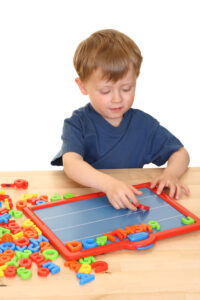
- Matching letter pieces then to written form with magnetic letters on the refrigerator. If you need to take a road trip then bring along a cookie sheet that can be used as a table. This helps practice letter identification, sequencing, name, and spelling.
- Complete various puzzles (interlocking or insert). You can make it more challenging by hiding it in a rice or bean bin and have them locate pieces. You can also hide them in various parts of the house and make it into a scavenger hunt by having them follow verbal or written directions. This works on listening and sequencing skills.
- Make a maze with sidewalk chalk on the driveway. Then have them follow with their bike or scooter, making sure they stay within the path. They will be working on problem-solving to find the end.
Sensory Play
- Swimming and various pool activities are a great way to get multi-sensory input with kids. Games such as basketball, searching for dive sticks underwater, playing “red light, green light” working on motor coordination and modulation allowing them to control their bodies when stopping or going.
- Messy Twister- it’s the regular Twister game board with a twist!! Place matching paint on the colored spots and play as directions instruct, except a lot messier!! This is suggested to play outside…unless you want multi-colored carpet!! Great for motor planning, right/left discrimination, and tactile sensory input.
- Make your own slime by taking 1 cup clear liquid glue + 1 cup of liquid starch. Separate into small bowls and add food coloring. Then squish, stretch, and play with slime! Very good tactile sensory play.