
by Phillip Kindschi | May 8, 2018 | Occupational Therapy, Speech Therapy


April has come and pass, but it brought warmer weather…and MAY! Finally!! For many reasons, April AND May are always very special to TherapyWorks. We celebrate these months in clinic for reasons that are dearest to our hearts.
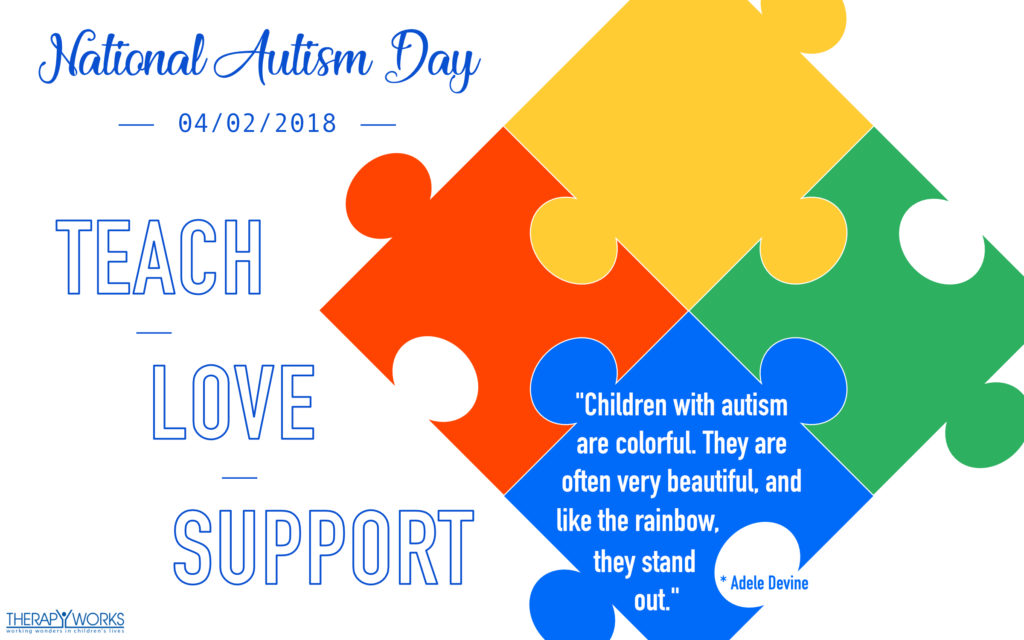
Reason 1: April, honors and celebrates Autism Awareness throughout and on a specific day as well; April 2nd marked the 11th annual “World Autism Awareness Day“. Autism does not end in April and it certainly does not become less important after the 2nd day of the month. Join us in celebrating autism awareness month throughout the month of April by finding ways to support the community and foundation. Autism prevalence is now one in every 59 children in America. Show your support for people with autism by wearing the Autism Awareness Puzzle Ribbon or simply adding the ribbon to your FB profile photo, not just in April, but throughout the year! A simple gesture can go a long way sometimes. Learn more about the diagnosis and what you can do to help the cause by visiting “www.autism-society.org” and/or visiting their Facebook page: “facebook.com/AutismSociety“.
Reason 2: “Occupational Therapy Month” is apart of April as well! We sure do love our O.T’s. here at TherapyWorks. Without these wonderful therapists, we wonder where the treatment would come from. O.T.’s treat so many children and adults with challenges such as Autism, DHD, Brachial Plexus, Sensory Processing, Fine Motor Skills and Sensory Developmental Delays. We would be lost without them as they have helped so many of our kids overcome challenges an surpass expectations. Just like Speech and Physical therapy, Occupational Therapy is very important to our growth and development in this world. Occupational therapy has been around for 101 years, starting back in the WWI era as ‘reconstruction aides’ in 1917. Helping our soldiers is an amazing way for a segment of an industry to begin! To all the O.T.’s here at TherapyWorks and the other hundreds of thousands across the globe, keep working wonders and healing hearts! You make this world a better place! THANK YOU!  💙
💙 .
.
Reason 3: “Better Speech & Hearing Month” means we celebrate all the SLPs out there doing their part to help everyone enjoy everyday sounds! We have a special spot for them as well as our OT’s & PT’s. Speech, language, and swallowing disorders result from a variety of causes, such as a stroke, brain injury, hearing loss, developmental delay, Parkinson’s disease, a cleft palate, or autism. This is where those special therapists come. With a Masters in hand, just like Occupational Therapists, they play a huge role in helping to strengthen the critical motor skills needed to live a happier life. There is a misconception out there about SLPs. Speech-language pathology is not simply restricted to adjusting a speaker’s speech sound articulation to meet the expected normal pronunciation, but also to help with speech fluency, language development, working with augmentative communication devices, Apraxia, literacy, voice difficulties and feeding/swallowing problems. So when you think about it, they do so much more than help with pronunciation and fluency. They’re our everyday heroes! So THANK your SLP when you get a chance, they deserve a lot of praise. MAY IS THEIR MONTH!
Also check out these related posts:
Autism – Where does it come from?
Could my child have autism?
What is Occupational Therapy?

by Phillip Kindschi | Feb 15, 2016 | Physical Therapy
Does your child trip and fall frequently? Does he/she seem uncoordinated or clumsy?
If so, PLAN ON ATTENDING THE FREE PARENT TRAINING AT THERAPYWORKS ON MARCH 3, 2016 AT 7:00PM!
SPONSORED BY THE TW PHYSICAL THERAPY DEPARTMENT!
- Find out if your child is more than just “clumsy”.
- Discover if your child is developing appropriately.
- Understand what it means to be “uncoordinated”.
- Learn about ORTHOTICS and if they are appropriate for your child.
- Determine if your child will benefit from Physical Therapy.
Reserve your spot! email info@therapyworkstulsa.com or call 918-663-0606 ext 289
by Phillip Kindschi | Feb 6, 2014 | General
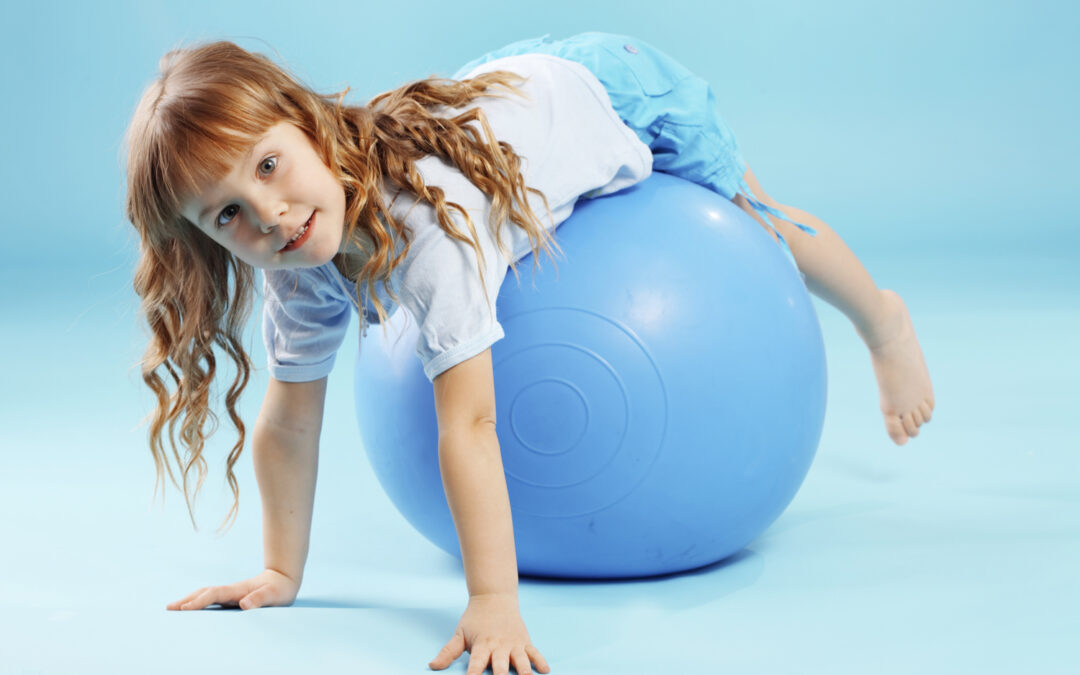
When the weather gets cold, children often spend their days watching TV or playing videogames. Here are some simple ideas for active indoor games to keep everyone warm and busy:
- Make an obstacle course using items from around the house. Jump over pillows, spin around a chair, perform 5 jumping jacks, crawl under the table, and race to the finish line!
- Use a book or a song with action words and act them out.
- Dance to music or play a game of Freeze (where when you turn the music off, everyone has to freeze in the position they were in).
- Masking tape on the floor can make an excellent balance beam and is easily removed.
- Masking tape can also be used for indoor hop-scotch.
- Make a treasure hunt. Hide objects around the house and have the children hunt for them. Use pictures of the objects for children who might need a little more guidance on what they are finding. To make it more difficult, make them perform a skill on the way to find a particular item, such as jump, skip, hop, or crawl.
- Basketball using balled up socks and a laundry hamper.
Enjoy your days inside instead of dreading them. The kids will thank you!
Danielle Lupton, DPT
Clinic Therapist, TherapyWorks
Related Post Suggestions:

by Phillip Kindschi | Jan 15, 2014 | Nutrition
 What do I feed my child?
The flu comes on strong and having “feel better food” already on your shelves is one step to being prepared when the flu hits your family suddenly. But of course the best defense against the flu bug is a year-round offense of eating a well balanced diet, lots of physical activity, plenty of rest and limiting stress. Focusing on foods that are dark green, deep yellow/orange, blue/purple, red, white (not brown) such as garlic, will provide plenty of vitamins and minerals, pump up your immune system and help to balance your daily meal plans . Those probiotics in yogurt may also aid your immune system as well as “whole” grains and omega-3 fatty acids (seafood, flaxseed, chia seeds and walnuts).
If you or your family member is unfortunate enough to get the flu it would be wise to be prepared by stocking up on a few items that help you “feel better”. Often with the flu individuals feel nausea and diarrhea. If this is the case, your appetite may be decreased and your “feel better foods” may be more limited. Also, it is vital to remember to consume fluids. Fluids should be in “clear” forms. Drink beverages that contain electrolytes such as Gatorade or Pedialyte (these also come in popsicle form). There are also “clear” versions of nutrition supplements such as PediaSure “Clear” or Ensure “Clear”. These will allow you to continue to get your nutrients without stimulating the gastrointestinal tract to the extreme. Juices that contain vitamin C and hot tea that contains green tea or chamomile may also aid. Other “feel better foods” could include pudding and Jell-O cups, which are always good choices to have in stock, as well as crackers, bananas, chicken noodle soup and microwaveable rice.
And lastly, keep plenty of antibacterial wipes to frequently clean room surfaces and soap to wash hands even more often.
Andrea D. Shotton MS RD LD
Pediatric Dietitian and Nutritionist

by Phillip Kindschi | Sep 26, 2013 | General
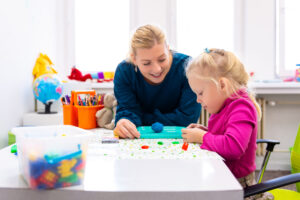 With school back in session and the holidays quickly approaching, it can be very difficult to find that “one on one” time with your children. Research studies have shown that it is not the amount of time spent with your children, but the quality of time that matters. Spending time with your children does not always have to include going out for activities. Quality time can easily be enjoyed at home. If you commit to at least 10-15 minutes per day with your child you can create sweet memories and experience many other benefits. These benefits could include enhancing your child’s social/emotional well being, developing fine motor or gross motor skills and best of all building a special bond between you and your child.
This list of easy steps can help you start today!
- Set aside 10-15 minutes everyday regardless of your child’s behaviors that day. Build this time into your calendar.
- Never threaten to take the time away as punishment.
- Be consistent. Stick to the 10-15 scheduled time.
- Do activities that require interaction with your child, not passive activities such as TV or computer.
- Two-three minutes before the activity is to end, give a signal (such as a timer going off) to let them know their time is almost up and to help with transitions.
Using this time will not only help create a special bond between you and your child, it will also let them know that you are
available. Your presence is important and will help give them a sense of security that they need at a young age.
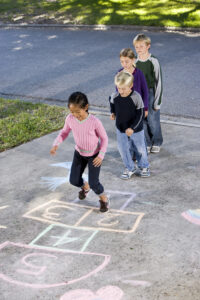
Here are 10 fun activities that you can do at home:
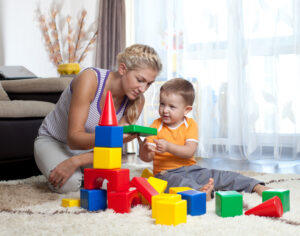
- Play with blocks or Legos. This is great for fine motor skills. Build something simple and let them copy your design.
- Make homemade play dough and keep it in the fridge to use for sensory input.
- Go to the backyard and search for fall leaves. Take the leaves, put them under construction paper and color over the leaf. The impression of the leaf will be seen on the paper. This is a great fall project and perfect to display on the fridge!
- Color together. Keep any broken crayon pieces. Grasping the small pieces is another way for your child to develop fine motor skills.
- Chalk on the driveway or patio. Start with simple strokes – vertical, horizontal and circular.
- Shaving cream makes bath time fun!
- Read a book together.
- Play with a ball. To make it more challenging change the size of the ball. Have them throw at a target like a colored picture or a picture of an action hero you print from the computer.
Now it’s time to create some special memories. Have fun! I promise you won’t regret it, and neither will your child!
